


The highlight of my Los Angeles trip was beating the crap out of friends at ping pong. One was an old friend, the other I’d just met. I took grave pleasure in winning again and again with my dubiously legal Miami Heat–branded paddle, bought for $4.99 during a Fanatics blowout sale. They, in turn, bullied me into joining their run club the next day at 6:45 am.
The Waymo was $3, so I pushed through my higher-than-baseline level of sleep deprivation to run 9 miles. It was a fateful start to a day ChatGPT’s Apple Health connector concluded was my all-time step record. On the run, I learned how people ended up in LA. One admitted the city had been his second choice—the Bay Area was just too expensive.1
Meanwhile, my new ping pong friend prodded me about my type. She was scheming to set me up with friends in San Francisco. I was scheming to move her (and her boyfriend) up to the Bay. My old friend sighed at these clumsy attempts to steal away the community he was building in LA. I told him to come up too. It was an old argument. He wouldn’t even need a new job. He worked remote!
I had booked this LA trip a few months earlier. It was an impulse purchase after Hank Green announced his TED Talk-inspired charity benefit Something Worth Knowing. He was gathering YouTube celebrities to give talks on a one-word prompt: hope. The ticket was $500, but how else should I spend the fruits of my tech labor? This would still be cheaper than my Nashville excursion to see Alan Jackson’s last full-length concert. This time, I only booked one ticket.
I last visited Los Angeles eight years ago, the final stop on a part-college tour and part-tourist expedition to the West Coast with my mom. The night before we left San Francisco on a red-eye MegaBus, we were followed on our walk to the bus terminal. I did not leave with a good impression of the Bay and swore never to take the bus again.
This time I flew to LAX, only to find myself on a bus shuttle to my Uber pickup location.2 An LA-born friend who lived in exile in San Francisco assured me that LAX was the worst airport in the world. The rest of the city would be better.
I followed her recommendation for a late night solo meal at BCD Tofu House. The food, at least, was excellent. I spent the time reading Lulu Miller’s Why Fish Don’t Exist, a fitting book for a trip about hope.
After dinner, I took the metro to the Holiday Inn downtown, where another friend had booked me a discounted stay.3 Only later, during a KBBQ lunch, did I learn that this friend generally avoided LA’s metro. As I left the station, I was reminded of San Francisco’s 16th and Mission BART station. No one took notice as I scurried away.
The next day, I followed advice to work at Motiq, a cafe with far more space than anything I’d seen in the Bay. I Ubered to dinner at a Koreatown noodle joint, after which I walked thirty minutes to attend Something Worth Knowing. I had tried to rent a bike, but failed to purchase a single-ride pass after ten minutes of redirection across two apps and a website.
Before the talks began, I channeled my John Green-at-the-casino energy and chatted with the strangers around me. I asked where they were from. The two older folks were LA natives. The youngest, a college student at Georgia Tech, had flown standby for free through her Delta co-op benefits. She had a discounted ticket to the event and wasn’t staying the night. It was also her birthday, and she’d spent the day exploring LA on public transit. I admired her thriftiness.
I also asked when they’d started following Hank and John Green. I wish I’d asked what had drawn them in. Had they asked me, I’d have told them how my sixth-grade teacher put on an episode of Crash Course World History.4 As the internet gradually replaced the extracurriculars of my elementary years, the Green brothers began to dominate my YouTube homefeed.
Something Worth Knowing appealed to this longstanding fandom, and my nostalgia for TED talks that promised profound insights to a younger me. Some, like Hans Rosling’s The best stats you’ve ever seen and Chimamanda Adichie’s The Danger of a Single Story, actually delivered.5 I hoped that Something Worth Knowing and its collection of YouTubers speaking on hope would offer something of the same.
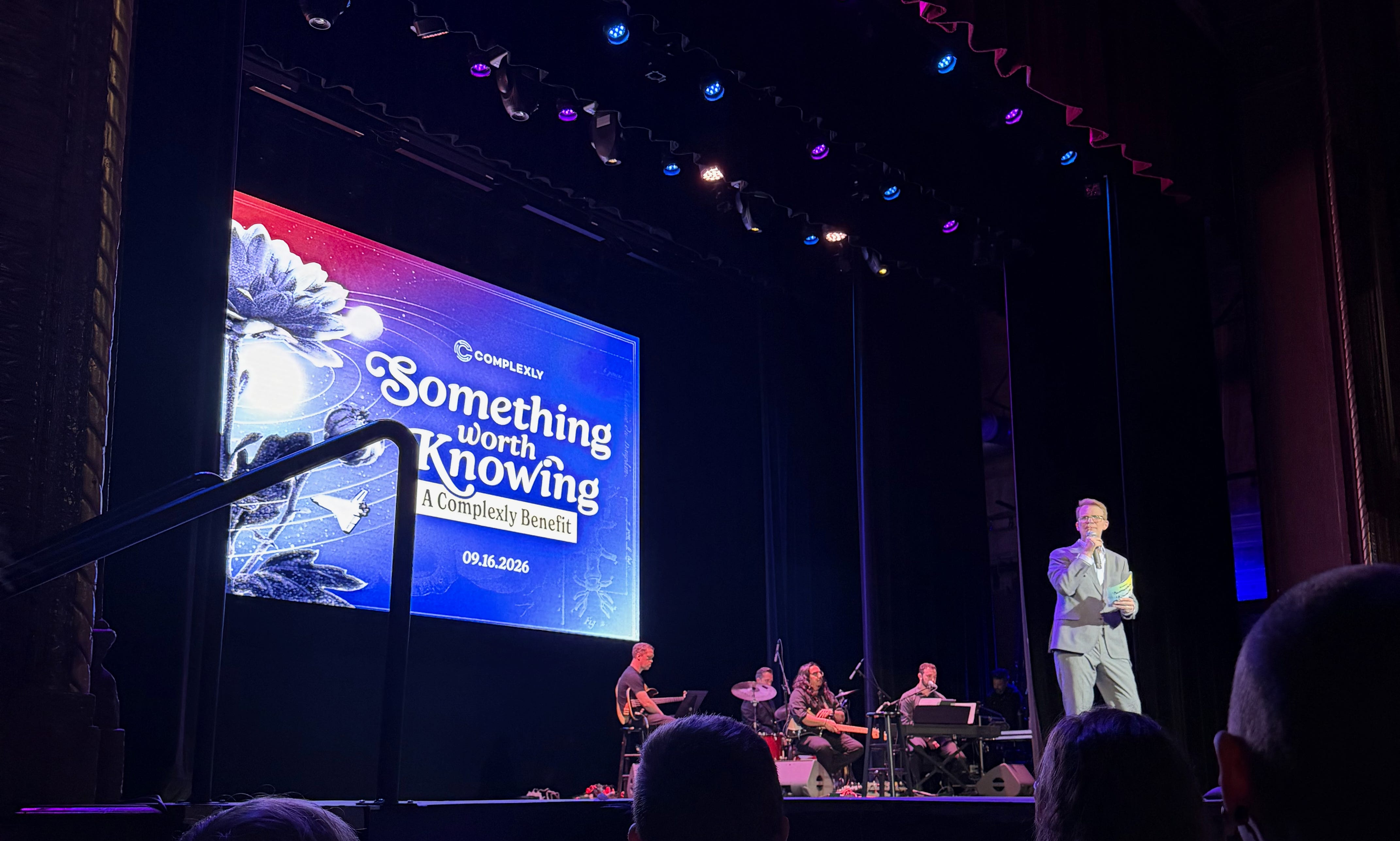
Writing now, weeks later, I’ve already forgotten most details. One thing I do remember, though, is how certain corners of the internet became Dr. Madelyn Leembruggen’s antidote to her school’s prevailing “cultural proclivity for nonchalance.” While the halls of my STEM-focused, grade-grubbing high school were certainly chalant, my then-ritual of falling asleep to John Green’s Anthropocene Reviewed podcast nonetheless increased my proclivity for pondering.
Perhaps this is how I’ve found myself on Substack, a Tumblr for grown-ups that’s become my corner for navel-gazing with those near and far. It’s been well over a year since I moved to San Francisco, and the one-year reflection essay that I started writing in April remains unfinished. Yet, I’ve written more voluntarily these last months than in all my years of college. I’ve read far more writing from friends too. What a surprise that this is my life in San Francisco, the place where I expected my dreams of sociology to die. Had I been given my own ten minutes on hope, this is what I would have talked about.
Along this journey of settling in, I began to believe in the relative insignificance of cities. What mattered more were the particular spaces and people we surrounded ourselves with in any given city. A previous working title for that unfinished reflection was Panning for Roots in San Francisco. I paired the title with a cheesy ending: “One can pan for roots anywhere, but this particular city upon the hills is where I’ve chosen to plant mine.”
Of course, this is a controversial belief. Many of my San Franciscan friends want to move to New York. Despite my best efforts, some already have. Meanwhile, I recently tried to convince a close friend’s girlfriend not to leave New York (and my friend) behind for San Francisco. In my most paternalistic moments, I diagnosed these friends as suffering from grass-is-greener syndrome. As John Green once said in Dear Hank and John, “The problem with any kind of moving or travel for me is that I bring myself with me.”
In these debates, we often brought up Paul Graham’s essay Cities and Ambition. I read it once years ago, and I read it again while writing this essay. In the time between, I built my rejection of Graham’s thesis with what I picked up from my friends’ arguments. It was easier to strawman a written argument when everyone was relying on memory. I preferred the vantage of anecdotes.
Back in senior year, I believed for a month that I’d move to Boston (really, Cambridge) after graduation. The day I visited Boston to interview at a construction tech startup, I navigated the city with my trusty combination of public transit and knockoff Razor kick scooter. The founder wooed me over dinner at a Chinese tiki bar where I tried a mango sticky rice colada. The food was great, further fuel for my inflammatory take that Boston outshines the Bay in Asian food.6
I saw in Boston the promise of a new start after years in a long relationship I had believed would destine me for the Bay Area suburbs. Now, in the largest of all college towns, I did not have to serve my time in Big Tech. Much like Graham, I believed Boston would push me to be smarter. Perhaps the city could even inspire me to stray from tech entirely someday.
Alas, I ended up in San Francisco. I took an offer that similarly promised work at the intersection of tech and social science. I was intrigued by the SF startup’s friends in high places and preferred a lottery ticket with better odds. I reasoned, too, that it would be easier in this city to escape back into Big Tech, a safety valve that enabled this era of exploration.
Although I spent two summers in the Bay, most of my friends had moved to New York. To meet new folks, I attended events hosted by new-age social startups like 222 and joined third space communities like The Commons to moderate success. I moved old friends over by referring them to jobs or finding them housing in the city. Gradually, I looped people into my life via potlucks and trash pickups and 5Ks.
This is my prescription for building community in a new city. One progresses from attending random gatherings to make friends, to bringing new friends along to these gatherings, to hosting the gatherings themselves. It’s a prescription that, in theory, can work anywhere. All it takes is showing up.
When my friend’s girlfriend visited San Francisco recently, we rearranged the furniture in my living room. With my housemate, we unfurled the rug that had stayed rolled up in the corner even a month after the housewarming. The next karaoke night would be a touch cozier. Perhaps she would be in attendance, if she actually left New York.
After college at Columbia and time on Wall Street, she wanted out. New York City, for all that it offered, could not provide to her the opportunities or community she sought in San Francisco. Here was the place to be around builders, to shape and not just be shaped by AI. Sure, New York had startups and founders, but as Graham observed nearly two decades earlier, they were second-class citizens. Her boyfriend may have found a home in New York among the folks Graham called “neanderthals in suits,” but she wanted a city whose milieu matched her ambition. She didn’t expect to stay in San Francisco forever, but she wanted at least a few years exploring somewhere new. Well into the night, we debated the merits of her potential move. I advised her on long-distance relationships despite being single.
I also contended that San Francisco and New York City were more similar than she thought. I talked of my reflection essay and the benefits of deepening one’s roots. Her boyfriend, tied to a particular sector of finance, had few available opportunities in San Francisco. Meanwhile, startups were booming in New York too, particularly fintech ones interested in hiring her. Why did it matter that startups weren’t the city’s primary export? Did a city’s prevailing culture have to match her ambition? Graham’s Milanese Leonardo, the hypothetical genius lost to history for being born in the wrong city, needed Florence. But did she really care to be a Leonardo? Ambition alone is a fuel that rarely burns clean. I was worried the move would be costly.7
A few weeks earlier, over decadently priced burgers at Niku Steakhouse, another friend also cited Cities and Ambition. After college at Berkeley and two years in San Francisco, she was moving back east to New York City. The Bay Area culture of outdoor hobbies had never appealed to her, even if she had recently grudgingly picked up running. She felt somewhat isolated in a remote-friendly Big Tech workplace that nonetheless required her to occasionally drive to the South Bay. Here in the Bay, she had settled routines and friendships and a relationship. In New York City, there was the possibility of change, of stopping the Bay’s tech-forward influence on her life. Her boyfriend probably would move soon too. There were plenty of Big Tech jobs in New York.
She preferred to be the techie around liberal arts majors, while I recently discovered my preference for being the sociologist around technologists. I built my community in San Francisco around hybrid folks like us—my karass amid the granfalloon of a city.8 She was looking for something similar, but in a more diverse granfalloon. There was no convincing her. The date was already set.
Despite the futility, I derided New York’s supposed diversity. Sure, it was true on paper, but how much of that diversity would she actually experience? More consulting and finance bros? Besides, my friends who lived there often seemed to still live within their college bubbles. There’s less pressure to form and deepen new relationships when so many people are already around.
In Los Angeles, the day after Something Worth Knowing, I met the friend behind my Holiday Inn discount for lunch over KBBQ. ChatGPT (and other friends) had assured me that this was a Los Angeles specialty. Like startups in San Francisco, KBBQ restaurants seemed to be everywhere. I asked this friend which one was best. He told me he had always found them much the same. The particular one we went to was probably a little better than any I’d tried in the Bay, but some places in Santa Clara came close.
After lunch, he took a small detour on his way back to suburbia to drop me off at Griffith Observatory. There, I camped out at the Cafe at the End of the Universe for hours talking to Codex. I was the lone person there on my computer, as my friend had warned. I felt the very model of a San Francisco tech bro, adrift in Southern California.
I had made plans in Manhattan Beach later that evening, so after 5 pm I decided to look up my route. Apple Maps proposed a forty-minute hike down from the observatory to take the metro before transferring to a bus.9 I had little faith the timing would work out, but an Uber would cost $100 and still take an hour and a half. I took the hike.
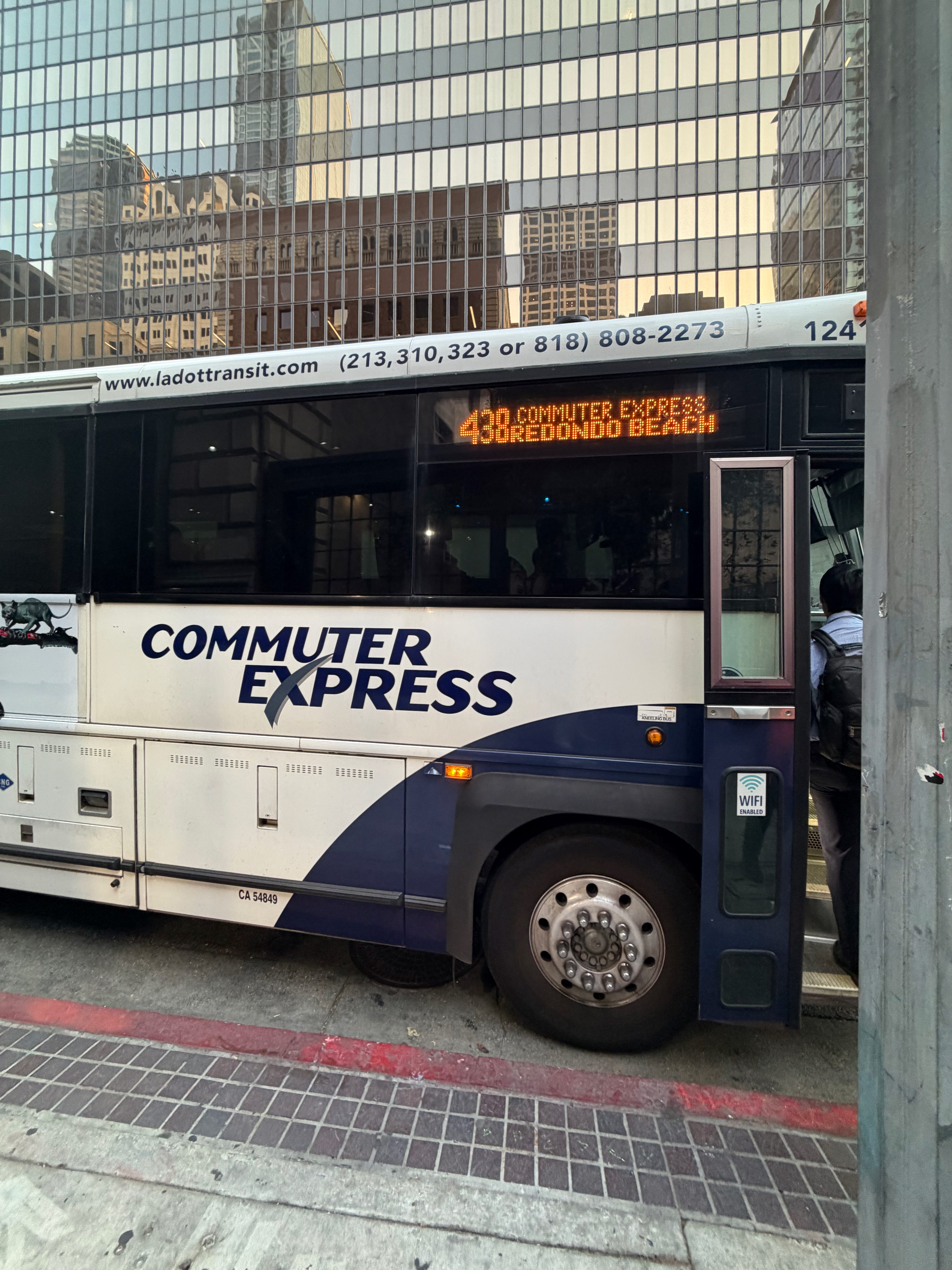
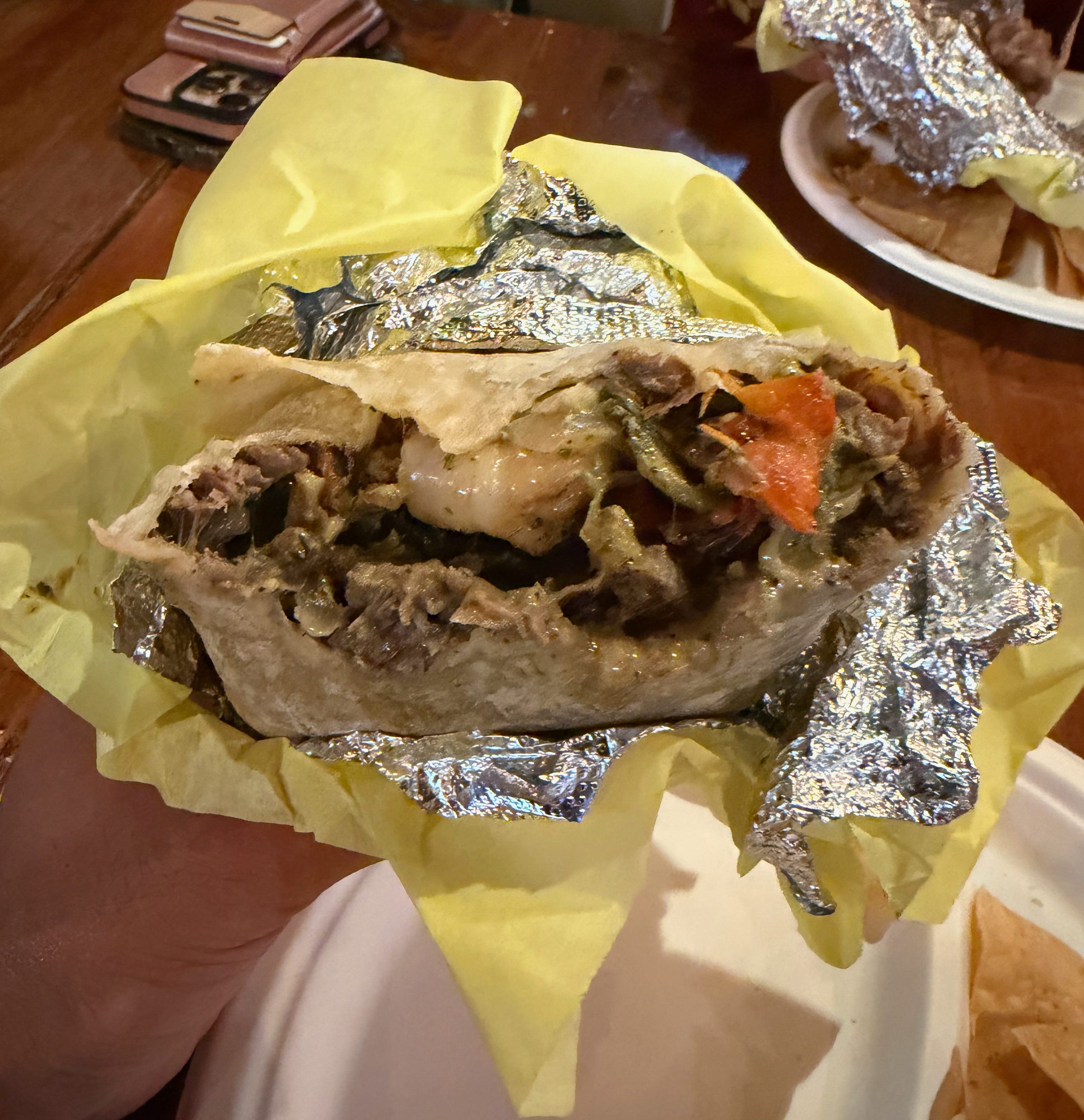
Two hours later, I finally arrived at Culture Brewing Co., where I met up with my college friend, her boyfriend, her cousin, and her cousin’s friend. Over beers and a disappointing lack of food, I found myself listening to her cousin and his friend gossip about celebrities and the physical transformations of their classmates ten years after high school. Afterward, the couple drove me back to their place in Santa Monica, where I’d crash for the rest of the trip. On the way, we stopped at Benny’s Tacos & Rotisserie Chicken, where I inhaled the best surf and turf burrito I’ve had to date.
The next day, I helped rekindle a college friendship when the old friend I was to play ping pong with came by the couple’s place. They had been friends in college, but neither had known the other was in the city. By the time we left, the couple had an invitation to his run club. They passed on the next morning’s run, though the boyfriend has since made running plans with him. The two of us then Ubered to dinner somewhat near the ping pong center. We avoided a second Uber by running a 5K there.
After my triumph in ping pong, I spent the night at a bar with the couple and two of their college friends. One was also visiting, while the other had grown up in LA and recently returned after a stint in the Bay Area. He was relieved to be back among childhood friends, several of whom dropped by later, in a city whose clubs played music he actually liked. His two years working at an increasingly big tech company in the South Bay suburbs had left him skeptical of finding the more artistic community he sought. He claimed everyone in the Bay only talked tech. I contended his take was reductionist, but who was I to dispute his lived experience? At a minimum, he had done a thorough inventory of the SF clubbing scene.
For the couple, Friday bar night with this friend and his childhood friends was one of the few ways they had found to meet people outside of work. They were new to the city and had so far found meeting new people rather challenging. My KBBQ friend, who grew up in LA, felt the same. His community was mostly high school friends, and the city was harder on newcomers. Over burgers at Father’s Office, a couple from my high school described the same struggle, even though one of them had gone to college in LA. At least the couples had each other.
Graham is right that when we talk about cities, what we’re “really talking about is collections of people.” But despite the conversations we overhear and the bookshelves we glimpse, we never experience the whole collection, only the slice we carve for ourselves. And how we carve it depends on a city’s social and physical infrastructure. In New York and San Francisco, one can live car-free on bike shares and public transit. In LA, it becomes much harder to show up.
My old ping pong friend is my only single friend living in LA who did not grow up there, and the only friend without a car. Nevertheless, he’s found contentment in church and run club and the miscellanea of activities with people in these communities. He’s even started intertwining them. Yet, the day we ran 9 miles, he bailed on a new friend’s birthday party when he realized it would be an hour away by Uber. Happily for me, though, he spent the evening with the couple and me as we walked the Santa Monica boardwalk—a stroll that brought flashbacks to my one road trip to Santa Cruz years ago, back when I was a Big Tech intern in the suburbs. The boardwalks seem much the same, even if the people I’m walking with are not.


I’m sure that in the end I could find contentment in LA too. I would buy a car. I would host gatherings that account for commute times. I would find my own niches amid the celebrity milieu: events like Something Worth Knowing, or John Green’s Hollywood, Ending book tour. My LA crowd would perhaps be more Nerdfighter than social technologist.
Yet over this weeklong trip, I couldn’t escape the feeling that LA was not my city. It was a feeling I felt too about New York, though less strongly. These were cities to visit. To stay with friends and renew old bonds. To talk of the hope that life will change someday and we might all be in the same place again (in San Francisco).
I’m no longer as strident in claiming that cities are interchangeable, even if I still believe San Francisco and New York are more alike than they first appear. Maybe, someday, there really will be enough reasons for me to be the one who moves. But for now, I’ll keep panning for roots in this 7x7 city of hills that has become my home.
LA, of course, is famously a low-cost-of-living city.
Curbside pickup was available, it seemed, for double the price. I have not yet climbed the hedonic treadmill far enough for such luxuries.
The perks of having a friend affiliated with IHG! Thanks again :)
I remember her caveats about how she disliked the series but that she was showing this first video because of student requests. It was too fast-paced, she said. Too entertaining, I thought.
Another favorite of mine is Joe Smith’s talk on how to use only one paper towel
My one visit to Yume Wo Katare during a Harvard-Yale football game has an outsized influence on this assessment. That, and my disappointment in San Francisco’s options for Shanghainese, Sichuanese, and Xi’an-style food. I also crave both knife-cut and Lanzhou hand-pulled noodles.
Gas costs are at an all-time high.
Terms from The Books of Bokonon in Kurt Vonnegut’s Cat’s Cradle. A karass is a “team [of people] that do[es] God’s Will without ever discovering what they are doing.” A granfalloon is “a false karass, [...] a seeming team that [is] meaningless in terms of the ways God gets things done.”
I’m aware there’s a shuttle bus down from the observatory. Google Maps suggested it. I didn’t want to have even more transfers that could disappoint me.
i understand where your fear of busses comes from now 😔
I would love a part two on whether your Berkeley friend liked New York City!! I'm curious why you would not move to New York, but consider New York and SF interchangeable