


Listen along: the playlist on Spotify. A Thai translation for my mom and family is on my personal website.
My music tastes have never quite fit demographic expectations. I’m an Asian American from the suburbs of D.C. I ascended into one of the Northeast’s ivory towers: Yale. Today, I’m a machine learning engineer and wannabe sociologist planting my roots in San Francisco. Sure, I grew up working class, but my mom’s a hair stylist and my dad a tour guide. There’s not a single blue-collar bone in my body. Yet somewhere along this road, I became a country music fan.
The first concert I ever paid for was Zac Brown Band at Citi Field the summer after my freshman year of college. My girlfriend at the time and I were staying at a $20 a night Airbnb in Flushing. The thirty-minute walk from Main St to the stadium took us from Hong Kong in the 90s to a Friday night in Texas. I could count on one hand the other Asians in the crowd. None of them were guys.
The opener, Cody Johnson, delivered an impassioned speech celebrating patriotic fervor, military veterans, and a nonpartisan culture of acceptance. He decried social media’s cancel culture amid a wave of cheers. We walked out of the stadium later that night to chants of “LET’S GO BRANDON!!”
This past June, I flew to Nashville to see Alan Jackson’s last full-length concert. I bought two tickets in October, back when I felt I had high odds of being in a relationship by summer. The tickets were $1715, but I reasoned that if things worked out, it would be a great couples trip. If it didn’t, well, surely I’d have fallen in love again by then. Summer was still a long while away.
The situationship didn’t pan out, nor did another romance sprout in its place. By May, it was time for a contingency plan. I marketed the ticket to friends and co-workers, first at face value, then at a discount. Most had no idea who Alan Jackson even was. I considered the financially responsible option of scalping the extra ticket. It would have paid for my flight. Friends suggested I instead set my Hinge location to Nashville to find my plus one, but I’ve never been quite so bold. In the end, I subsidized the ticket for a long-distance friend to meet up with me in Nashville. It was a great weekend couples trip, even if it was not quite the one I had expected.
At the concert, some Canadians in the row above us asked how I had become an Alan Jackson fan. Did my parents, like theirs, indoctrinate me over long car rides across the American equivalent of Alberta? The story I told was rather peculiarly intellectual.
One day on the internet, I somehow found myself reading a blog post about country music’s reaction to the tragedy of 9/11. I was down a freshman year rabbit hole trying to understand the relationship between music and political ideology. How had country music come to be associated with Republicans? That was how I stumbled upon an article describing how Alan Jackson’s somber tribute, Where Were You (When the World Stopped Turning), stood apart in a musical era of jingoistic patriotism with its message of faith, hope, and love.
I had already heard the song before, but the article became a catalyst for diving deeper into the Alan Jackson catalog. My next loves were Little Bitty, with its jaunty vision of an ordinary life built together, and the tender look back on such a life in Remember When. I was then at the beginning of what would become a nearly four-year relationship, already imagining a future I might someday look back on with nostalgia.
When I’m asked how I fell in love with country music more broadly, though, I start with a childhood of self-inflicted patriotism and dreaming the American dream. Until Passenger’s Let Her Go broke this spell on the radio in the seventh grade, I listened mostly to patriotic songs like God Bless the U.S.A and old American folk songs. A YouTube ripoff1 of the Cedarmont Kids singing Simple Gifts was probably my most played video during fourth grade. Meanwhile, the Battle Hymn of the Republic was a middle school favorite for bursting into song alongside my Communist-pilled friend, who now works in private equity.
Passenger and a barrage of YouTube acoustic cover artists dominated my listening throughout high school. Country music began creeping in through the mysteries of the Spotify algorithm at some point in senior year. In retrospect, this wasn’t actually much of a leap. Country still had guitars, vocals, and stories to tell—just with more steel guitar, less piano, and a lot more twang.
The first Dolly Parton song preserved in the artifacts of my Spotify playlists is her collaboration with Pentatonix on a new version of Jolene. My first listen was in late 2020, at the start of my impromptu Covid gap year. That same day, I discovered 9 to 5. I hadn’t actually worked a nine-to-five yet,2 nor was I a woman, but one could empathize with the feelings nonetheless.
It was Coat of Many Colors, however, that actually etched Dolly into those memories of mine. The records are lost as to how I discovered it, though Last.fm preserves what happened next. I listened once, added it to my playlist, and forgot about it for a week. Then one day I played it eighty times. Twenty-six more the next.
I didn’t grow up like Dolly in anything akin to a Tennessee mountain home. I never went to church on Sunday, and I never heard crickets in the fields nearby. My mama never sewed any clothing for me. My grandma did knit me sweaters, but they were of a single color and I was never made fun of at school. None of this stopped me from going back through the years, wanderin’ back to seasons of my youth at the ripe old age of 18. Six years later, at 24, I’m wandering back once more.
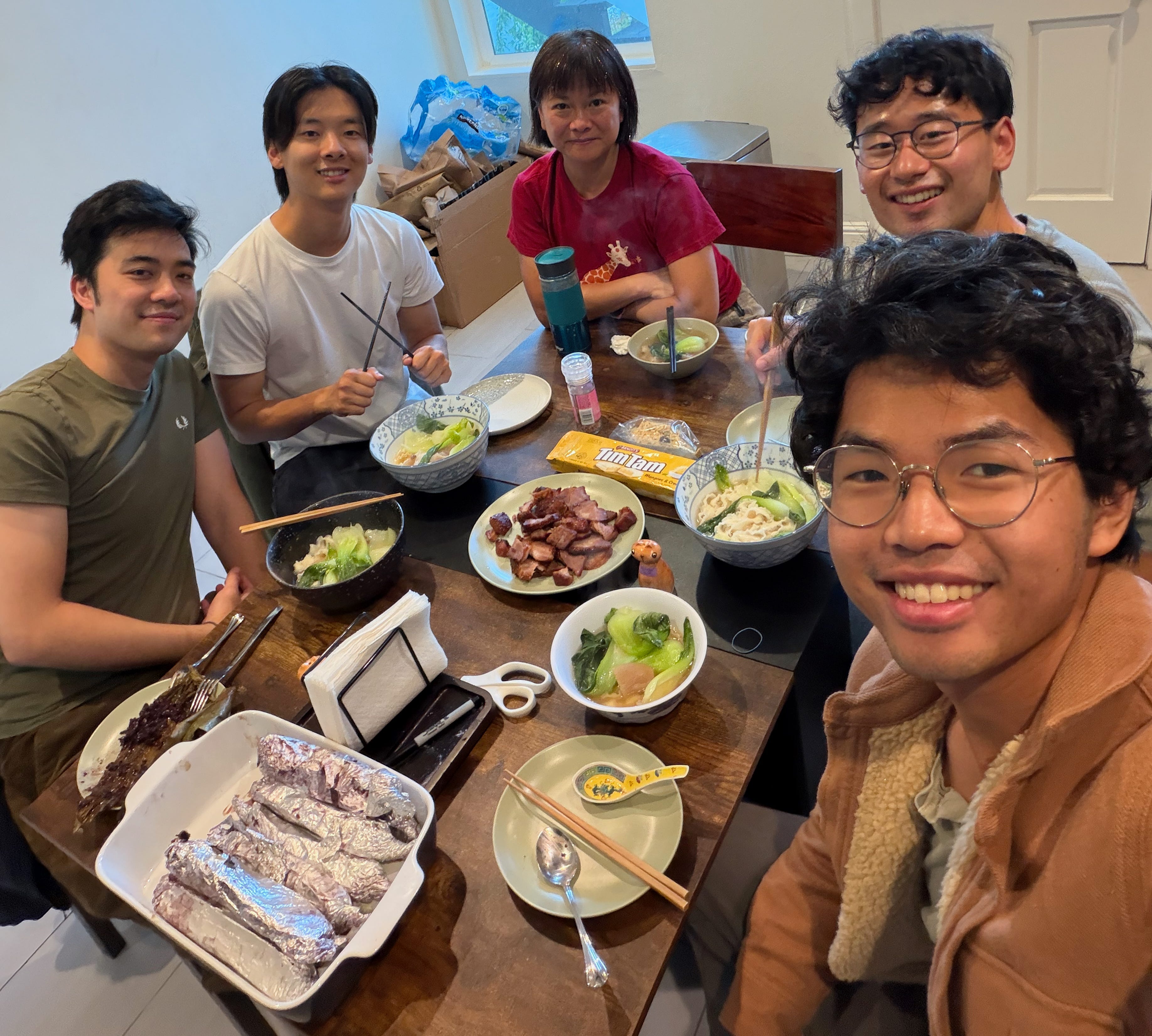
My mom visited me in San Francisco for the first time this past week. On a twelve-hour layover before flying to Australia for the Sydney marathon, she gave me a perm. Before leaving home, she stayed up all night preparing my favorite foods. Her carry-on bag was packed with spring rolls, Thai barbecued pork, and sticky rice in many forms: mango sticky rice, khao lam (sweet rice stuffed in bamboo), and zongzi (savory sticky rice wrapped in bamboo leaves). As we ate these foods for dinner with several of my friends, I was reminded again of Coat of Many Colors and my mom’s love for me.
I first heard the song in early 2021, midway through what should have been my freshman year of college. I was instead spending a gap year doing nothing in particular. Of course, I still invented goals to strive for. I learned to read Chinese. I worked on flashcard research. I read books about educational inequality. Really, though, I was spending a whole lot more time than normal with my mom.
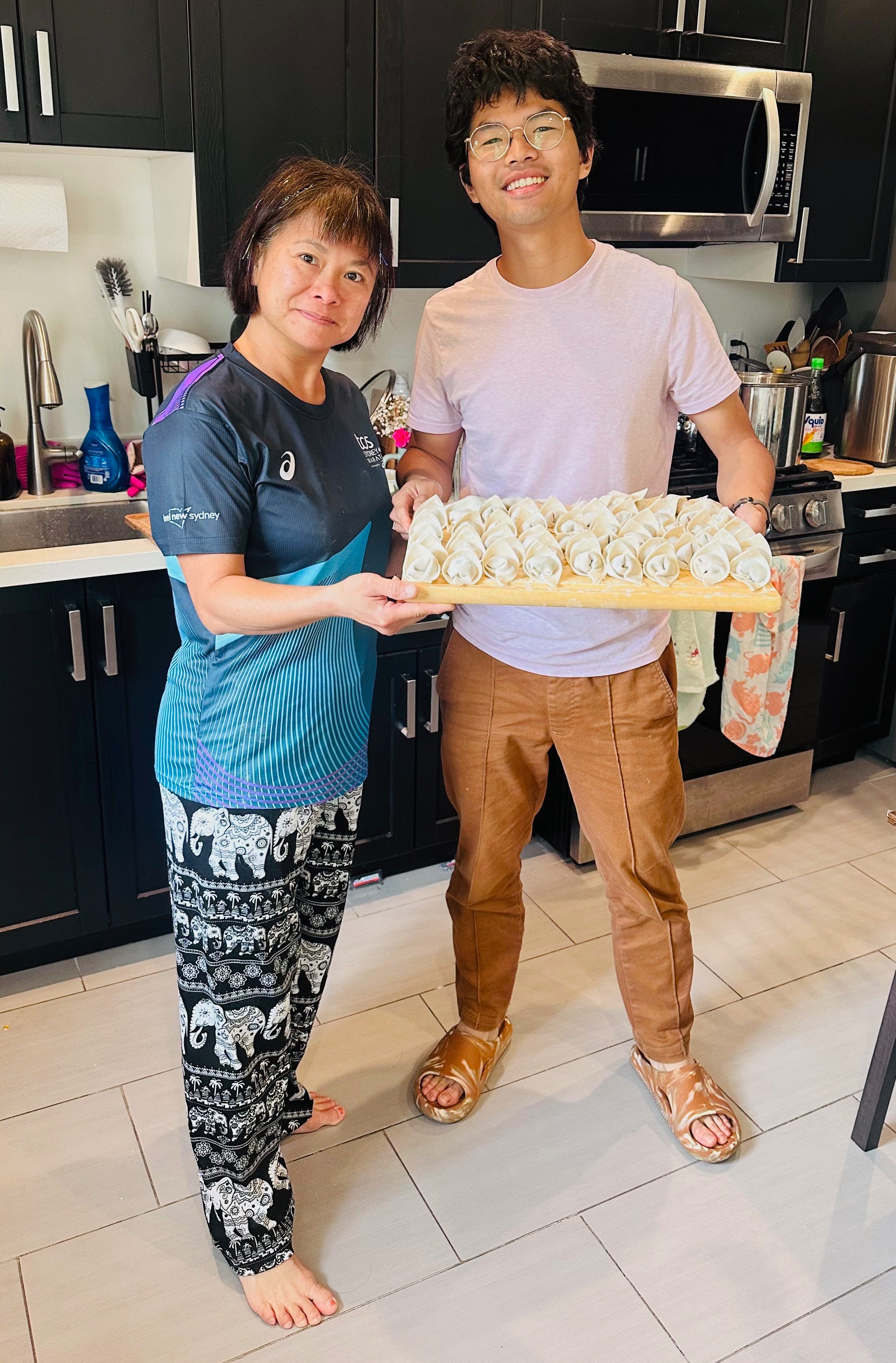
My mom’s pandemic hobby was baking and cooking foods like the ones she would later bring to San Francisco. She made even more complex foods back then. A few times, my mom undertook the multi-day process of making xiao long bao, delicate soup dumplings that require you to simmer broth into gelatin, chill it, and chop it into the filling. She never quite learned to wrap them so that the skin was thin, prompting complaints from her perpetually ungrateful child: me.
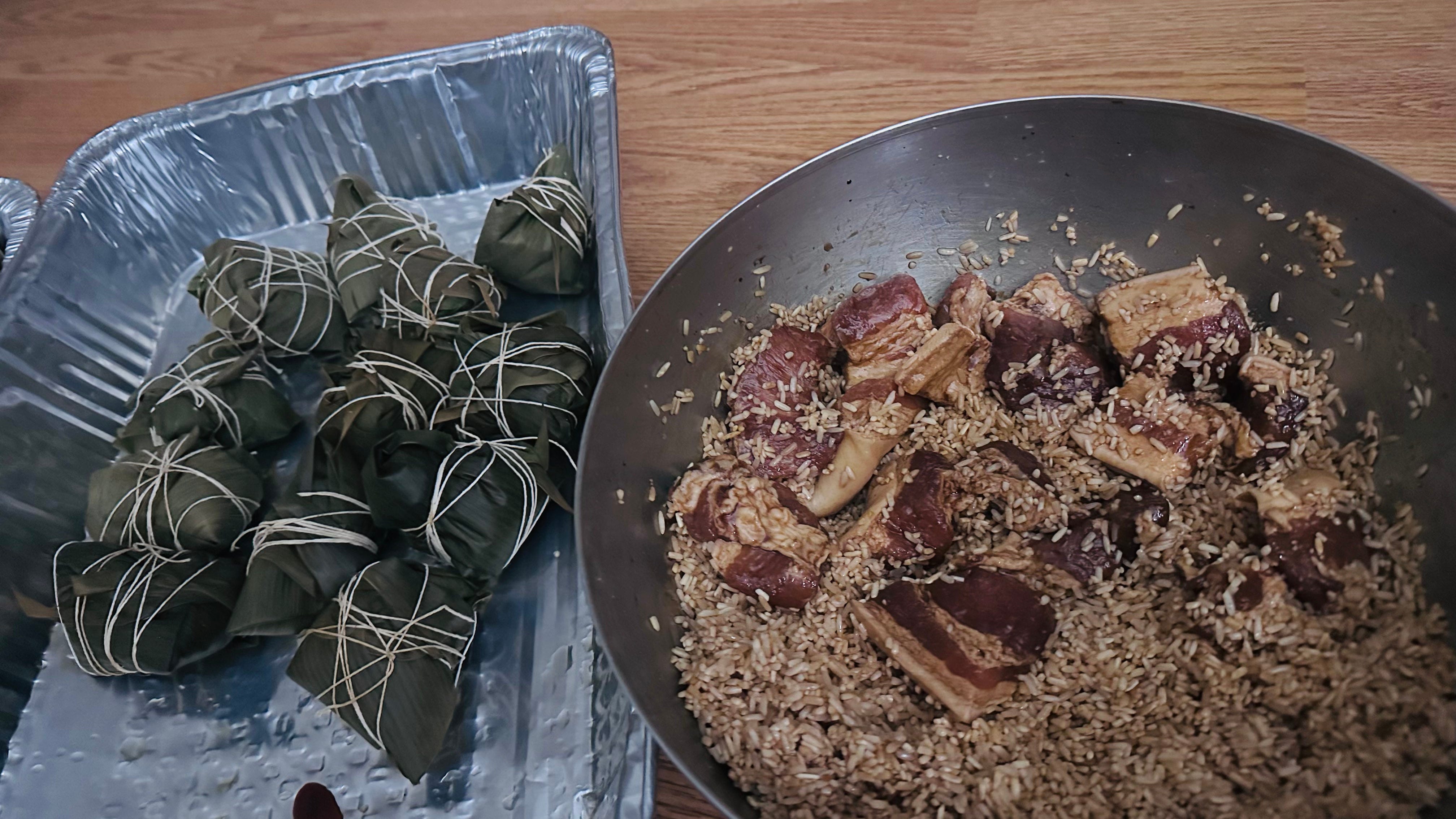
Most of the time, my mom labored alone. Sometimes, though, we made food together. We eschewed traditional dumpling making in favor of learning together how to wrap bamboo leaves around sticky rice to create zongzi. The videos were in Chinese, a second language for both of us. It had become our lingua franca, even as we struggled through some of the instructions.
Communication has always been a little tough for us. It became harder to share parts of my life with her as I climbed the ladder from specialized schools to Yale and, eventually, a startup in San Francisco. More and more of my world was unfamiliar to her, while neither of us quite knew what vocabulary the other possessed across our patchwork of Chinese, English, and Thai.
The difficulty was not only linguistic. My mom rarely remembers the people I talk about, and she doesn’t always ask the questions I wish she would. Sometimes, halfway through a story, she interrupts with whatever unrelated thought has just occurred to her. After our recent dinner, a friend remarked that I had seemed exasperated with her at times and asked whether this was simply our dynamic.
Perhaps it is. A remnant of the ungrateful child who cannot see past the flaws of the people closest to him. I am impatient with her. I decide too many things are not worth the effort of explaining. And I have never put in the time to recover Thai, my first language from the year I lived in Thailand as a two-year-old. Chinese didn’t have to become the lingua franca.
Yet, whenever I listen to Coat of Many Colors, I find myself feeling rich as I could be in the love we share. My childhood was never quite like Dolly’s In the Good Old Days (When Times Were Bad)—we had shoes, and medicine, and eventually money. Still, decades spent cutting hair left my mom with carpal tunnel. Like Dolly, I wouldn’t trade my memories of that time for anything, and I would never go back either. On my recent trip to China, I bought her a pair of good hairdressing scissors, the kind she had never been willing to buy for herself. She had spent all her money on me.
Dolly passed away on August 25th, 2026, the day before my mom arrived on her layover with the food she made for me. I found out at work. I’ve been playing Coat of Many Colors on repeat since.
A new friend from work recently asked me why I loved country music. I tried to make him see. But in the moment, every explanation sounded a little trite. I probably sounded like I just liked cookie-cutter songs about cookie-cutter lives, and country certainly has its fair share of songs that fit unflattering stereotypes. Still, the greatest country songs tell simple stories about what makes a life rich—glimpses of lives and feelings that remind me of what I’m carrying with me up this ladder of the American Dream.
The same friends who had no idea who Alan Jackson was have spent this week posting about Dolly. She was one of the last country greats that almost everyone—including the Democrat city kids I’ve planted my roots among—could love without needing to explain themselves. My Yale secret society has been talking since graduation about a reunion trip to Dollywood. Perhaps it’s time for that to leave the group chat.
In case you missed it at the start, you can listen to the playlist of referenced songs/artists in the playlist on Spotify.
1 The original ripoff has since been deleted. Here is the music video uploaded by the actual Cedarmont Kids.
2 If we keep a strict definition of the hours, I still have never worked a 9 to 5. Then again, most people don’t.
Another friend back on substack, oh happy day
this was lovely!