


Musical accompaniment on Spotify.
There’s something very twenty-something about having inherited an extraordinary vocabulary for interrogating one’s life while possessing comparatively few settled institutions telling you how to live it.
—ChatGPT, 2026
I’ve acquired the unfortunate habit of pasting Substack essays written by crushes and friends of past and present into ChatGPT. I like to analyze their works alongside the literary greats—and my own work, which rarely sees the light of day. To procrastinate from said writing, I debate the alleged insights. It is easier to think than to do.
ChatGPT is the college classmate who actually does the readings and readily draws connections between anything you throw at them. The connections may be tenuous or altogether wrong, but then again, my classmates often were too. Alternatively, one can liken these conversations to a poor man’s imitation of an Oxford tutorial. I have 1:1 access to a rather effusive college professor fond of platitudes, and all I’m spending is a few cents in water.1
The two of us like to tinker with my essay fragments until they sound better. I then argue with the AI as it valiantly attempts to help plan out the larger essay, producing outlines and analyses of questionable value over minutes that bleed into hours. The last few months, I’ve been working on an essay about my childhood, dreams, and search for belonging in San Francisco. For the folks I’ve told about it, it’s a race to see whether that essay or the Winds of Winter will come out first.2
My peers and I are mostly in our mid-20s. Our lives are still full of potential and possibility, even if doors are just now beginning to close. The circumstances, it seems, have led us to earnestly ponder the load-bearing questions of life, meaning, and the human condition.
Most of us have day jobs befitting the Silicon Valley milieu, but we’ve all found our own little ways of resisting as we conform to the system. We write (or in my case...attempt to write) on Substack. We explore undersaturated hobbies like improv and line dancing, or go a little extra with the conventional ones—one software engineer is also a part-time yoga instructor. I co-organized a small cabin-in-the-woods reading retreat for Ezra Klein’s Abundance, an experience that contributed to my later acceptance into a weekend reading retreat on womanhood.3
One of my friends started an anti-tech tech club to foster community. Yet, none of us are truly against tech. To the consternation of several friends, I’m not even looking to reduce my screen time. The solace of group chats where we share memes, things to do, and absurd details of the day has no true analog equivalent.4 Our phones offer the opportunity to turn fortuitous encounters into relationships that leave footprints on the sands of time.5 Of course, they can’t do so alone.
I often buy multiple tickets to events without quite knowing who else wants to come. I trust in higher beings that someone will be interested enough in the event, in me, or take enough pity on me to say yes.6
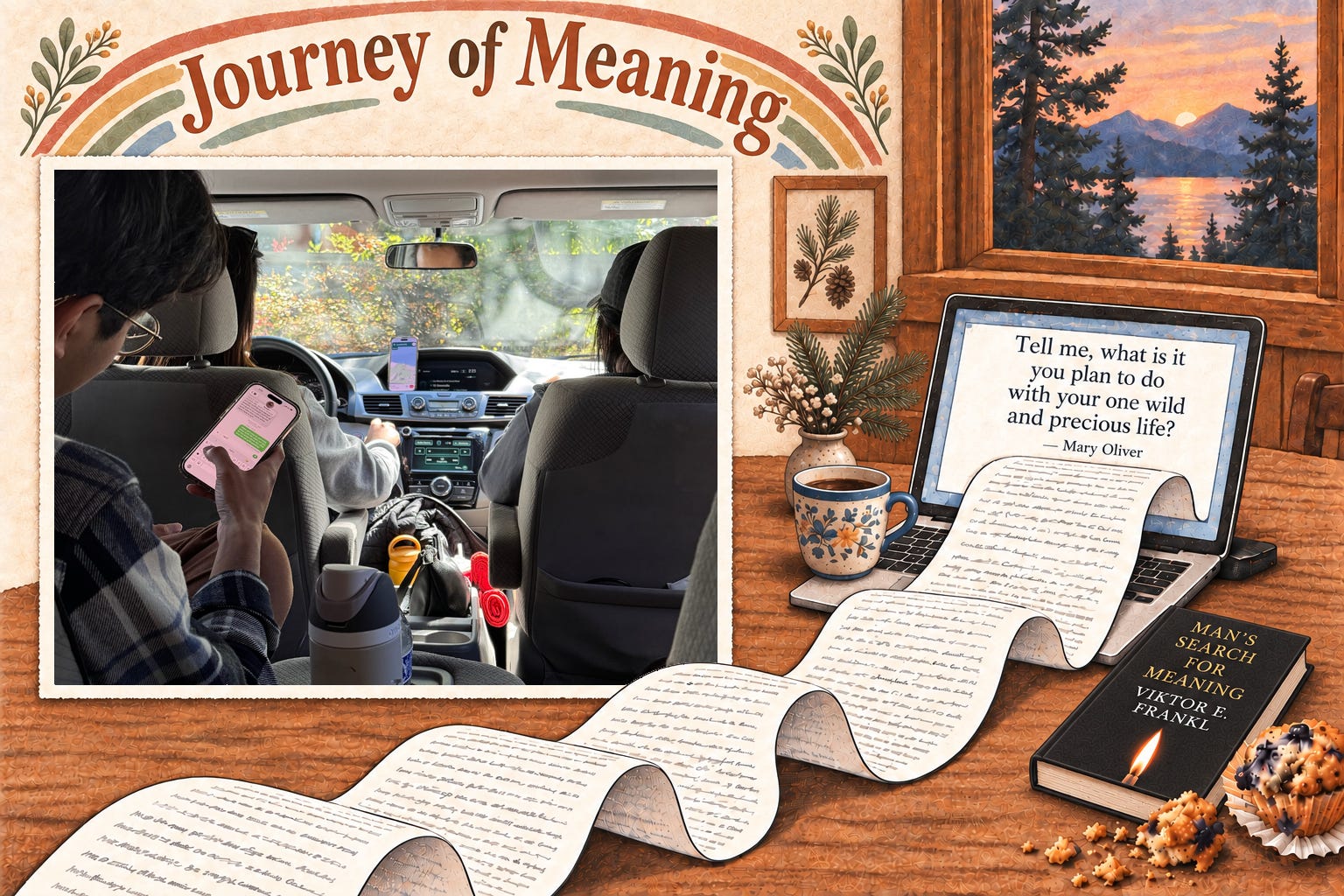
The day I published my first Substack post, I became qualified to organize a last-minute writing retreat for Labor Day weekend. It was the Monday before, and my housemate and I realized we had no plans. The group chats yielded two quick recruits, but we wanted more people. I recruited a freelance writer I’d met once at a magazine launch a month before. Another co-conspirator convinced her childhood friend to fly up from LA. She drove the six of us in a Honda Odyssey booked from Turo. It was her first taste of being a soccer mom.
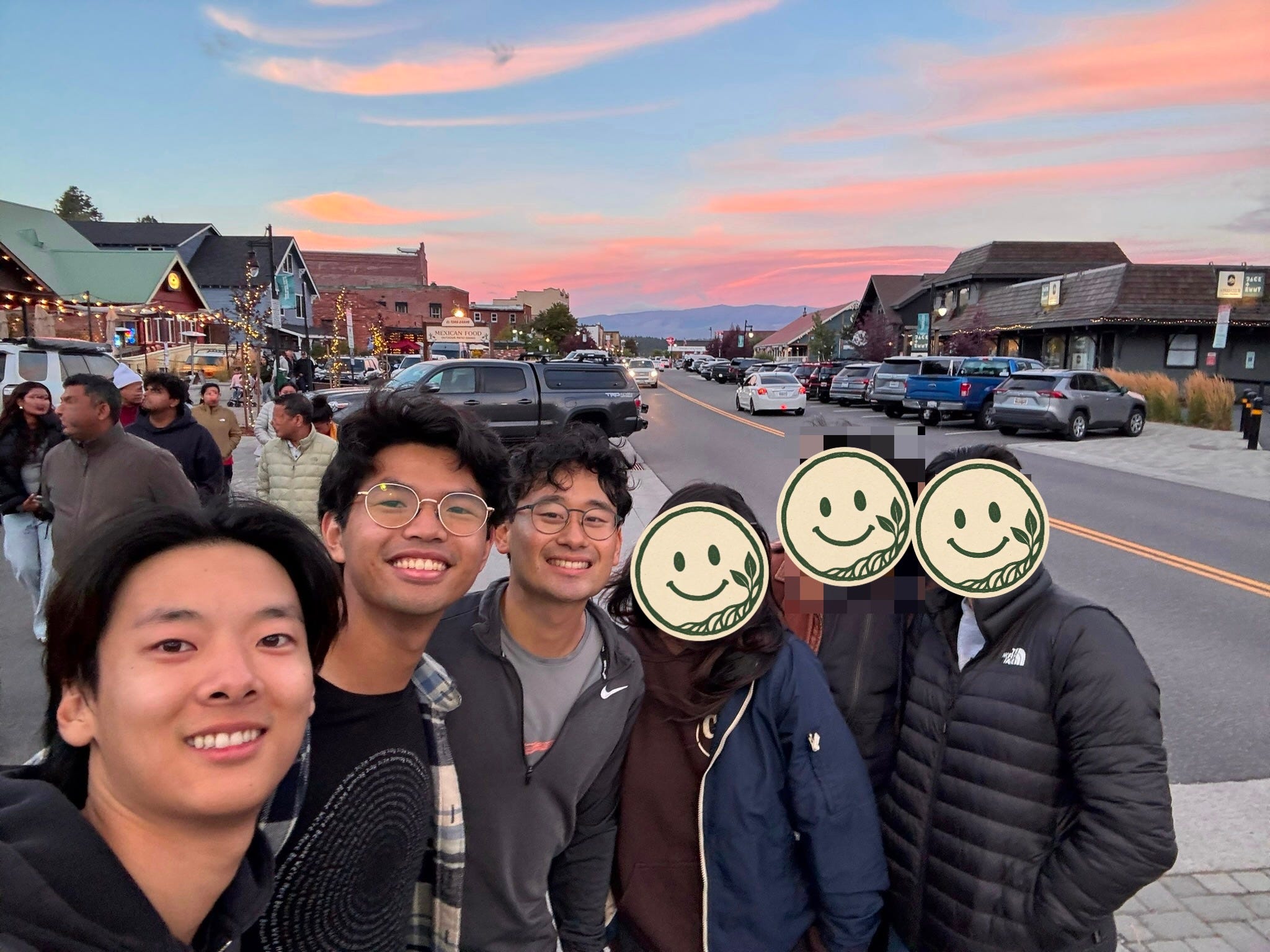
The first night of this trip, I caused a stir by declaring Mary Oliver the de facto poet of Substack. It was a sweeping judgment, though not quite the pejorative some took it as. I’ve liked Mary Oliver since high school when John Green read “I Go Down to the Shore” on a podcast and I found a pirated copy of A Thousand Mornings online.
I go down to the shore in the morning
and depending on the hour the waves
are rolling in or moving out,
and I say, oh, I am miserable,
what shall—
what should I do? And the sea says
in its lovely voice:
Excuse me, I have work to do.—Mary Oliver, “I Go Down to the Shore”
Back in 2025, I rang in the new year at a weeklong tech and social impact fellowship where we squatted in San Francisco’s most competitive ‘hacker house’ and I experienced the good life in bed with an Eight Sleep. We did some hacking of our own, but really we spent our days practicing rituals of community building and introspection. To prepare, we had been asked to read Robin Wall Kimmerer’s Braiding Sweetgrass alongside canonical works of effective altruism like Peter Singer’s The Life You Can Save. We were left to make sense of a seeming tension between duty to the wider world and attention to one’s surroundings. Each night, we ended with a new Mary Oliver poem.
Tell me, what is it you plan to do
with your one wild and precious life?—Mary Oliver, “The Summer Day”
After the program ended, a few new friends took to Substack. They pondered their learnings and the questions still left unanswered. Meanwhile, the fellowship’s co-organizer entreated me to write my polemic against education’s outsized importance in the American welfare system. He urged me to follow what made me feel ‘alive.’ This was not quite the banal language of dreams and passions, or so I was told. Regardless, I could not conceive of chasing such a life here in the real world.
By the end of that year, I had unexpectedly moved to San Francisco. I took a job at a startup. The treatise remained unwritten, but I now had several more friends with Substacks.
Perhaps my impression of Mary Oliver’s Substack ubiquity says more about my community and the algorithm than the platform itself, but ChatGPT backed me up when asked.7
Our mid-20s may mark the end of development for our prefrontal cortexes, but they’re just one stage in what John Green characterized as one’s journey of meaning. This phrase, too, was richly debated. When ChatGPT read an earlier draft of this essay, it said:
“We’re all on our own journeys of meaning nonetheless” sounds like precisely the accommodating platitude you tease ChatGPT for producing.
One member of our writing retreat—the least tech-pilled among us8—was skeptical too of both the phrase and its accompanying genre of Substack writing. For her, now was the time to stop the navel-gazing of her first few years since graduation. She needed to start making money. Meaning could come later. It wasn’t quite the same, but I thought of Marc Andreessen’s controversial exhortation to stop thinking and start doing. The retreat’s most tech-pilled Substack writer had been the first to share the venture capitalist’s advice with me. We have all answered such calls with mixed results.
True to form, I spent a good chunk of the retreat reading instead. I reasoned that to write about myself, my friends, and our journeys of meaning, I should re-familiarize myself with Viktor Frankl’s Man’s Search for Meaning. I first read it in high school on the recommendation of Harvard day-in-the-life YouTuber John Fish. Seven years later, I remembered the name of the book and little else. I had written a half-finished draft of this essay a few weeks before the retreat. I had a title promising literary analysis I could not provide. ChatGPT had taken me in circles trying to explain Frankl’s philosophy and connect those ideas to my friends’ Substack essays.
I wrote that draft while traveling across China. In Chengdu, my friend Frank9 read it and kindly suggested I may have gone a little overboard in fawning over certain people’s writing. He also summarized Frankl: happiness cannot be pursued; it must ensue. Trying really hard to fall asleep can make it harder to fall asleep.
Though Frankl had developed logotherapy before his imprisonment in Nazi concentration camps, he drew on those experiences in Man’s Search for Meaning to argue that life could remain meaningful even when almost everything familiar had been taken away. A person could still have someone to love, work to complete, or a responsibility to meet. Rereading the book, I could understand how having this why could give life value even when little else remained in one’s control.
In the absence of deprivation, Frankl diagnosed boredom as the ailment of the post-war era. Logotherapy would be the salve to the twentieth century’s existential vacuum, for he predicted that “progressive automation will probably lead to an enormous increase in the leisure hours available to the average worker.” Maybe AI will actually take us there in the twenty-first. Oh what shall—what should I do?
My friends and I are already asking the question, well before the long-prophesied leisure Armageddon arrives. One quit his job in search of more meaningful work. He writes against “consensus tracks,” the scripts for achievement that reward performing value over creating it. There are still goals to chase, but he takes pride in having chosen them for himself. For him, that has meant founding a startup in San Francisco.
There’s no value in winning a game that doesn’t matter to you, so what is it that you really want? Is that the game you’re playing?
Another friend questions whether we can truly know what we want. She grieves at 24 while in a Shanghai McDonald’s over what’s changed in her past dozen years, and what will change still over the next dozen. In her chase for community and love, she can no longer tell whether the choices she’s made are in search of approval or happiness. The boundary between desire and duty is blurry, for “we become the decisions we make.”
This is the circumstance, these are my cards. I will play my hand.
My friends and I are amidst a cornucopia of opportunity. Our journeys of meaning are complicated not by boredom in the absence of a why but by a paradox of choice. Which of the many possible whys should we pursue? My newest Substack friend laments how the dreams that drive her have grown smaller since youth. Should the realism of adulthood temper those bigger dreams? Reading Man’s Search for Meaning again, I couldn’t quite parse Frankl’s thoughts on these dilemmas.
ChatGPT summarizes Frankl’s guidance as:
attend to the meaningful possibilities in your actual circumstances, judge which call for your response, and take responsibility for acting on that judgment.
I’m still not quite sure what that would entail. It reminded me of being told to follow what makes me feel alive.
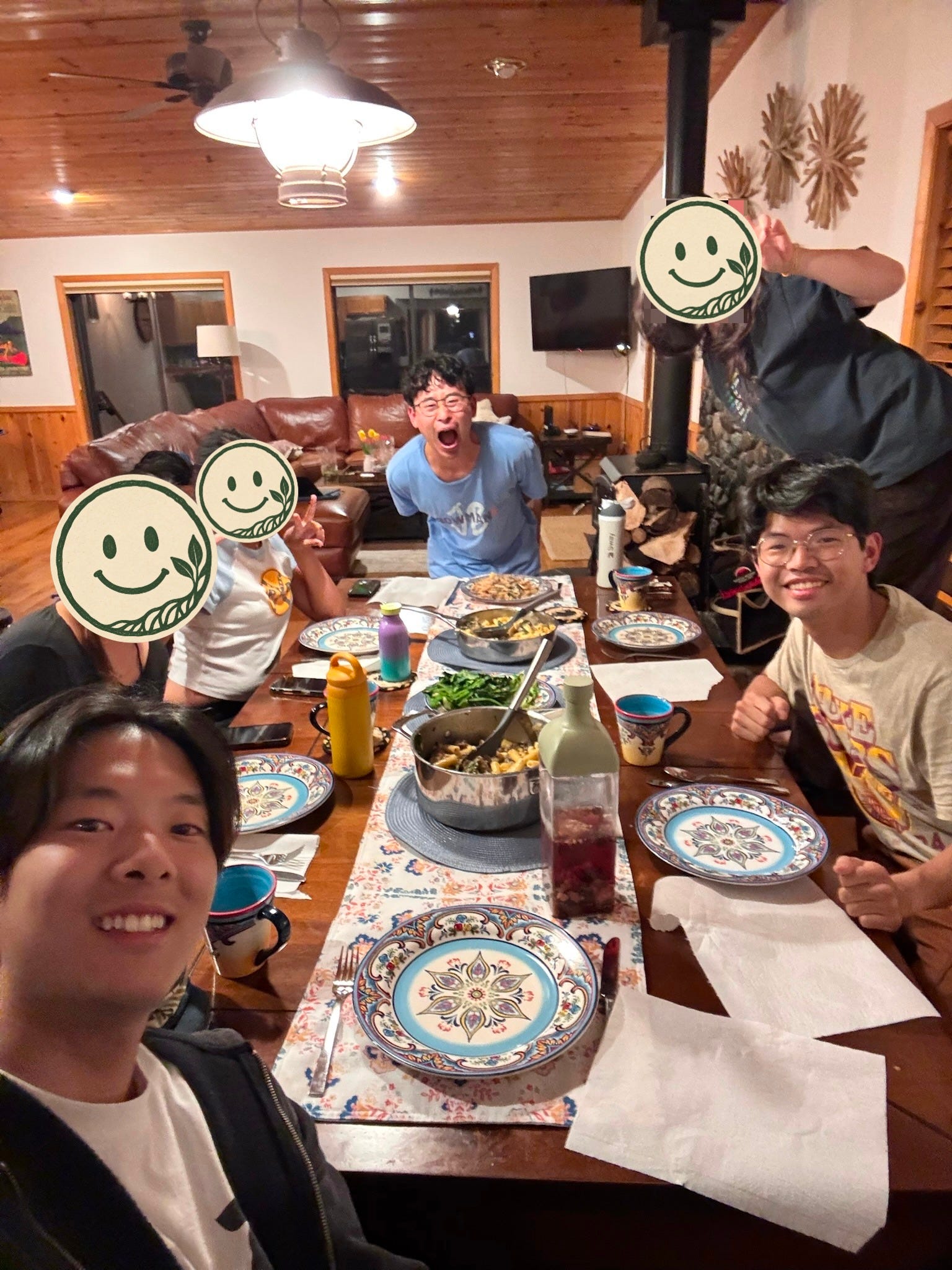
Meanwhile the world goes on. I was not the only one who failed to write all that much on the retreat. We spent as many hours eating as we did writing, and most of us discovered a profound love for Ikeda’s marionberry muffins. The lone dissenter only dared to reveal himself at the end of the trip. We stopped at Ikeda’s again on our way back. I bought two packs of muffins to share at work, and another for myself.
On the car ride back home, I ask my writer friend about her hopes for the future. She is not one for a five-year plan. When it comes to her future community, though, she imagines a circle much like the one she has cultivated today. It is a wish she knows must adapt as people move, grow older, and the world changes around us.
When she turns the question back on me, I stumble a little. My own plan for my late 20s has long been marriage and a white picket fence, perhaps with a child on the way. I think I still want this. I don’t believe that love is like happiness. It cannot simply be left to ensue. But neither can I make it happen by pursuing it hard enough.
It’s been easier to pursue friendship. I’ve grown attached to the life taking shape around these relationships, even as I want a partnership to come along soon. But once it does, I hope I’ll still find myself on group trips like this one, comparing notes on our journeys of meaning. To the chagrin of several of my friends, I’ll probably still be talking it through with ChatGPT too.
Appendix
I followed Frank’s advice. I cut a bunch of essays and people. Still, I wanted to shout out some recent reads, including pieces that appeared in earlier drafts.
Fine. Perhaps it’s electricity, compute, or the future of the planet. Depends on your worldview.
I would have preferred to reference Thomas Rhett’s Country Again: Side B, teased way back in 2021. Unfortunately, I may be the lone person on the Internet clamoring for that one.
Cue the performative male allegations.
Well, I guess there’s snail mail.
I understand that sand washes away. I assume Longfellow did too. But hey, friendships and life itself are impermanent. Let us be like Dean Lewis and Enjoy It While It Lasts.
Anyone wanna be my +1 for:
October 2nd: David Wimbish & The Collection at Brick and Mortar Music Hall
October 13th: Vidura Bandara Rajapaksa at Cobb’s Comedy Club
I also have three extra tickets for Lucas Zelnick October 25th at the Palace of Fine Arts!
We all love it when people bring AI into the argument, right?
Mary Oliver has become something like the default poet of reflective internet prose, especially Substack/newsletter writing about meaning, nature, grief, attention, aging, and “how to live.” - ChatGPT, 2026
An enabling friend circle is optional now that we can justify ourselves with AI.
She was the one who flew up from LA. The retreat was ethnographic fieldwork for her. Only three of us actually worked in tech, but as Paul Graham suggests, the city’s been changing our non-tech SF residents too.
Not to be confused with Frankl.
Hahahaha I really enjoyed this read - equal parts insightful, relatable, and hilarious - and honored to have made your appendix list!
big mouth Andrew